
Dance extravaganza flaunts national cultural diversity
 Print
Print Mail
Mail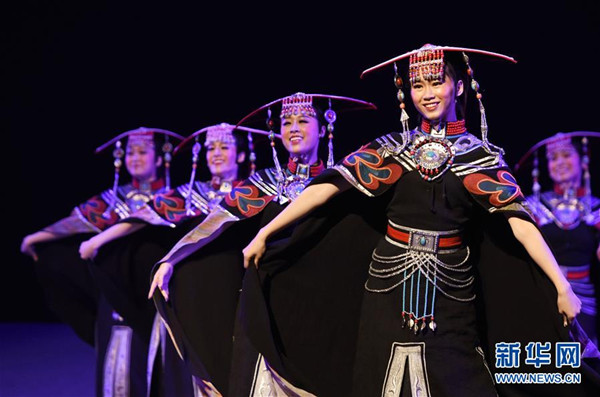
Dancers perform a traditional Tibetan dance at China’s 7th Ethnic Culture and Art Festival in conjunction with the 2nd National Excellent Ethnic Dance Performance held in Hohhot, Inner Mongolia autonomous region on July 8, 2017. The event attracted hundreds of dancers across a range of traditions to perform assorted and striking dances. [Photo/Xinhua]
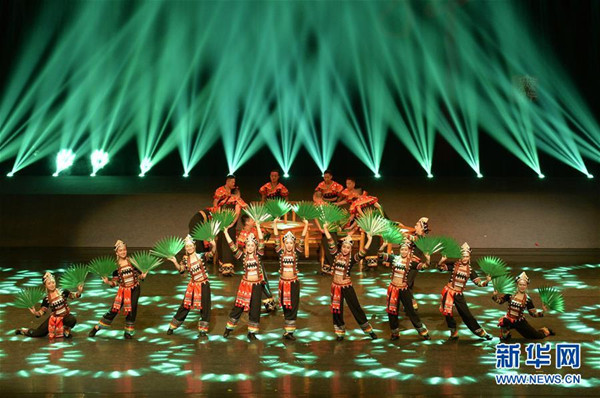
This green-themed Hani dance, connected to the ethnic group that originates from Yunnan province, Southwest China, offered audiences a flavor of one of China’s many distinctive dance style. With a population of nearly 1.4 million, the Hani people are renowned for farming terraced fields and their continuing practice of traditional worshipping rituals. [Photo/Xinhua]
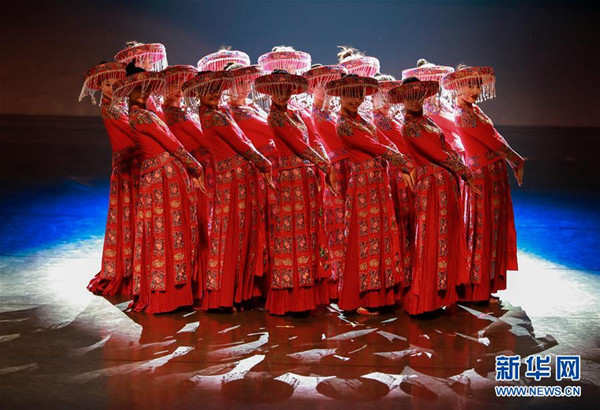
This eye-catching performance offered a taste of Miao ethnic culture, a group that can be found across a vast and disperse area including Guizhou, Yunnan, Sichuan, and Guangdong provinces. Keen on singing and dancing, the Miao people are known for rich creativity and unique folk customs. The Miao are also skilled in designing ethnic patterns in various handicrafts, including cross-stitch work, embroidery, weaving, and paper-cutting. [Photo/Xinhua]
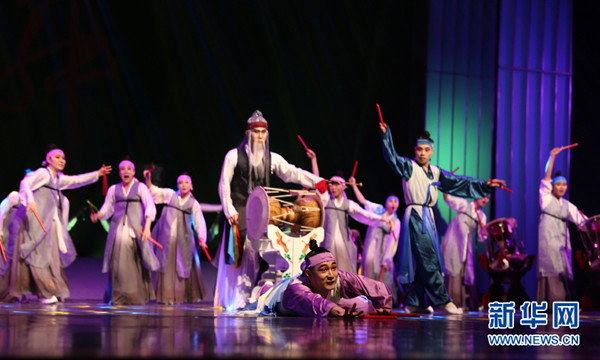
Dancers offer a traditional dance of Korean ethnic group at China’s 7th Ethnic Culture and Art Festival. People from the Korean ethnic group typically live in China’s northeastern provinces such as Jilin and Liaoning. At traditional festivals, the Korean women usually dress in loose skirts and tight jackets while dancing. Men usually take part in ethnic events sporting loose trousers fastened at the ankles and tying long hair in a bun. [Photo/Xinhua]
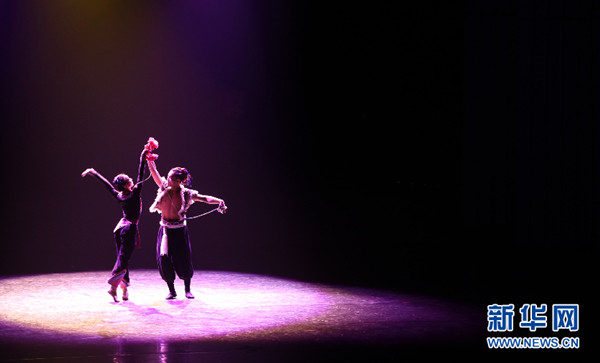
Dancers give a traditional Qiang ethnic group performance on July 8, 2017. With a population of over 300,000, the Qiang people mostly dwell in hilly and stream-crisscrossed areas in Sichuan province. The Qiang often wear gowns made of cotton and silk layered with sleeveless sheepskin jackets. They are known for their work songs and their dances are accompanied by musical instruments such as gongs, tambourines, and bamboo flutes. [Photo/Xinhua]
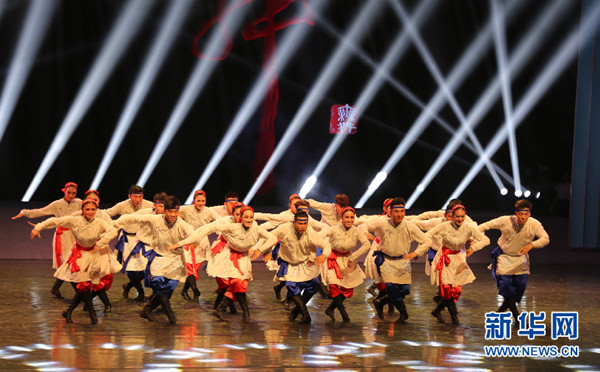
This group of Mongolian dancers take to the stage at China’s 7th Ethnic Culture and Art Festival, something of a hometown performance given the ethnic group largely calls Inner Mongolia autonomous region home. Mongolians are well-known for skill in horsemanship and archery thanks to a pastoral lifestyle that developed over the past centuries. Nadam, a grand Mongolian fair, is usually as the prime festival showcasing the region’s historic stylistic customs including Bohk (Mongolian wrestling), horse parading, and camel racing. [Photo/Xinhua]